Understanding the Difference: Muscle Building vs. Strength Training
Discover the key differences between muscle building and strength training, with expert workout plans and science-backed strategies for optimal results.
 Jeff·Dec 5, 2024·1 min read
Key Takeaways
- Strength training uses heavy weights for 1-8 reps to build maximum force, while bodybuilding uses moderate weights for 8-12 reps to build muscle size.
- Strength training focuses on compound movements like squats and deadlifts, while bodybuilding mixes compound and isolation exercises for complete muscle development.
- Both approaches will make you bigger and stronger, but strength training prioritizes power gains and bodybuilding prioritizes muscle growth and aesthetics.
- Recovery is crucial for both styles with 48 hours between training the same muscles, but bodybuilding requires more attention to nutrition timing and meal planning.
- You can combine both methods in your training program since they're not mutually exclusive and many successful programs use elements from each approach.
Get a Free AI Coach on WhatsApp
Ask questions, get workout plans, and track your progress — all from WhatsApp.
Message Your CoachThe age-old debate between muscle building (bodybuilding) and strength training continues to perplex fitness enthusiasts. While these training methodologies share common ground, they serve distinctly different purposes and require unique approaches.
Primary Objectives
Strength training focuses on enhancing your ability to generate force and improve athletic performance. The primary goal is to become stronger, with muscle growth being a secondary benefit. Bodybuilding, conversely, emphasizes muscle hypertrophy and aesthetic development, with strength gains as a beneficial side effect.
Training Methodologies
Load and Repetitions**Strength training typically involves:
- •Heavy weights (80-100% of 1RM)
- •1-8 repetitions per set
- •3-5 sets per exercise
Bodybuilding typically involves:
- •Moderate weights (70-80% of 1RM)
- •8-12 repetitions per set
- •Multiple sets with higher volume
Exercise Selection and Technique
Strength Training Focus
- •Compound movements
- •Emphasis on performance-related range of motion
- •Focus on progressive overload
- •Core lifts: squats, deadlifts, bench press
Bodybuilding Focus
- •Mix of compound and isolation exercises
- •Full range of motion for maximum muscle stimulation
- •Higher emphasis on mind-muscle connection
- •Greater variety of exercises
Sample Training Programs
Strength Training Program
Day 1 - Push**
- •Bench Press: 5x5 at 80-85% 1RM
- •Overhead Press: 4x6 at 75-80% 1RM
- •Close-grip Bench: 3x8 at 70% 1RM
Day 2 - Pull
- •Deadlifts: 5x3 at 85-90% 1RM
- •Barbell Rows: 4x6 at 75-80% 1RM
- •Pull-ups: 3x8 bodyweight
Day 3 - Legs
- •Squats: 5x5 at 80-85% 1RM
- •Front Squats: 4x6 at 75% 1RM
- •Romanian Deadlifts: 3x8 at 70% 1RM
Bodybuilding Program
Day 1 - Chest and Triceps
- •Incline Dumbbell Press: 4x10-12
- •Flat Bench Press: 4x8-10
- •Cable Flyes: 3x12-15
- •Skull Crushers: 3x12
- •Tricep Pushdowns: 3x15
Day 2 - Back and Biceps
- •Lat Pulldowns: 4x12
- •Barbell Rows: 4x10
- •Cable Rows: 3x12
- •Barbell Curls: 3x12
- •Hammer Curls: 3x15
Recovery and Nutrition
Both training styles require proper recovery:
- •Minimum 48 hours between training same muscle groups
- •6-8 hours of sleep minimum
- •Adequate protein intake (1.6-2.2g/kg body weight)
- •Proper hydration
Scientific Evidence
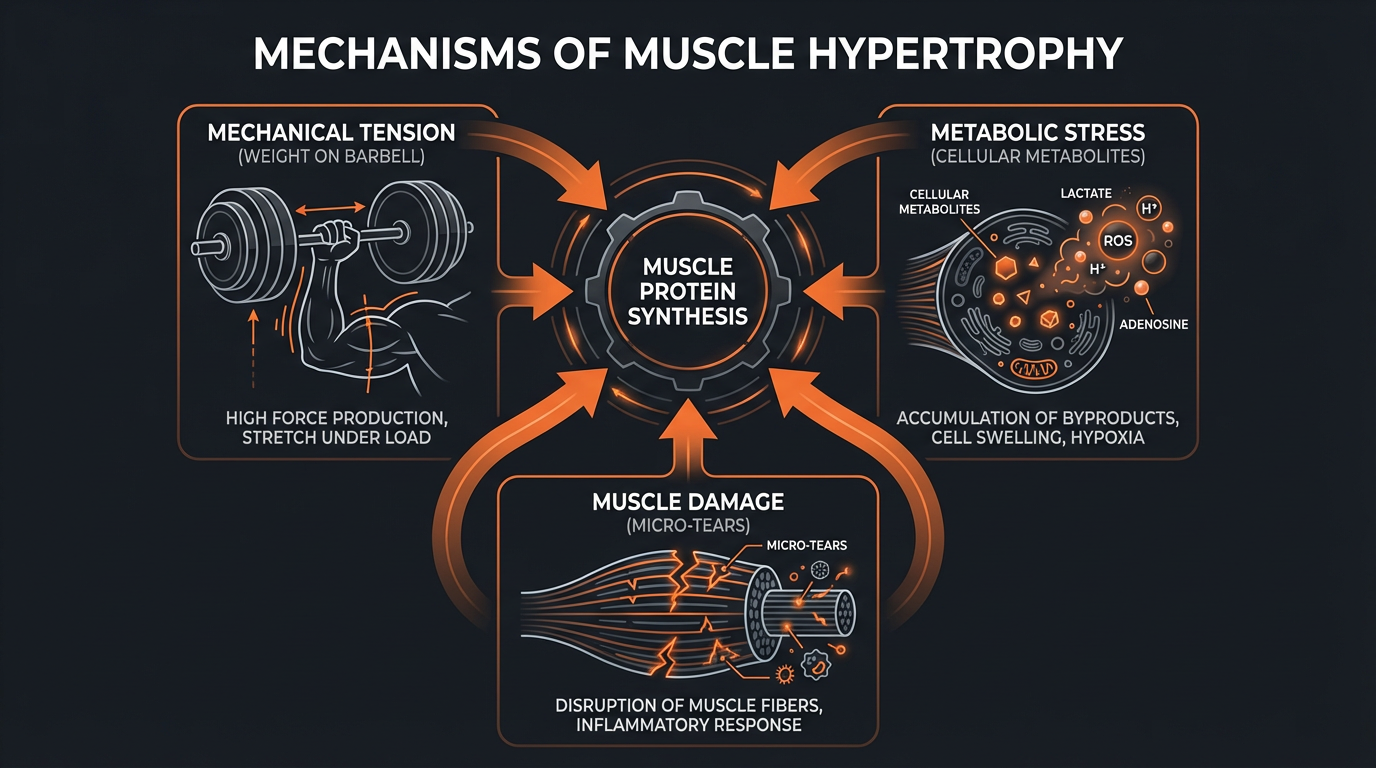
Research shows that muscle hypertrophy can occur across various loading schemes when training to failure. However, strength gains are typically superior with heavier loads. A 2020 study found that while muscle growth was similar between different loading protocols, strength improvements were significantly better with higher loads.
Practical Recommendations
Choose based on your goals:
- •Strength training for performance and power
- •Bodybuilding for muscle size and definition
Consider your experience level:
- •Beginners often benefit from strength training fundamentals
- •Advanced lifters can incorporate both methodologies
Monitor progress:
- •Strength training: Track weight lifted and performance
- •Bodybuilding: Track measurements and visual changes
Safety considerations:
- •Focus on proper form before increasing weight
- •Maintain controlled movements
- •Allow adequate recovery time
Remember that these approaches aren't mutually exclusive. Many successful training programs incorporate elements of both methodologies to achieve comprehensive fitness development.
Frequently Asked Questions
- What is the difference between muscle building and strength training?
- Muscle building (hypertrophy) focuses on increasing muscle size using moderate weights for 8-12 reps with shorter rest. Strength training prioritizes how much you can lift, using heavier loads for 1-5 reps with longer rest periods.
- Can you build muscle and strength at the same time?
- Yes, especially if you're a beginner or intermediate lifter. Running a program that mixes heavy compound lifts (3-5 reps) with higher-rep accessory work (8-15 reps) gives you the best of both worlds.
- Should I train for size or strength first?
- If you're new to lifting, train for strength first. Building a solid base of strength with compound movements for your first year makes hypertrophy training way more effective later because you can handle heavier loads.
- Why do some bodybuilders look big but aren't that strong?
- Hypertrophy training builds sarcoplasmic volume (fluid and glycogen in muscle cells) which adds size but not proportional strength. Powerlifters train neural efficiency and tendon strength, so they can lift more relative to their size.
- How many reps should I do to get bigger?
- The 8-12 rep range is the sweet spot for muscle growth for most people. But sets of 5-8 and even 15-20 can build muscle too, as long as you're pushing close to failure and getting enough total volume per week.