The Role of Creatine in Muscle Building: Dosage, Timing, and Effects
Read our comprehensive guide on the role of creatine in muscle building: dosage, timing, and effects.
 Jeff·Aug 20, 2024·4 min read
Key Takeaways
- Creatine boosts ATP production which gives you more energy for heavy lifting and helps you bang out more reps.
- Start with 20 grams daily for the first week split into 4 doses, then drop to 3-5 grams daily after that.
- Take your creatine right after your workout on training days and anytime with food on rest days.
- You'll see 5-10% better strength gains compared to training without it, plus faster recovery between sessions.
- Creatine pulls water into your muscles making them look fuller and more pumped while actually improving performance.
Get a Free AI Coach on WhatsApp
Ask questions, get workout plans, and track your progress — all from WhatsApp.
Message Your CoachCreatine is a popular supplement among athletes and fitness enthusiasts. It’s known for its role in enhancing muscle mass, strength, and performance. But to fully reap the benefits, it's crucial to understand the proper dosage, timing, and effects. This article delves into The Role of Creatine in Muscle Building: Dosage, Timing, and Effects, providing you with valuable, research-backed insights.
Understanding Creatine: What Is It and How Does It Work?
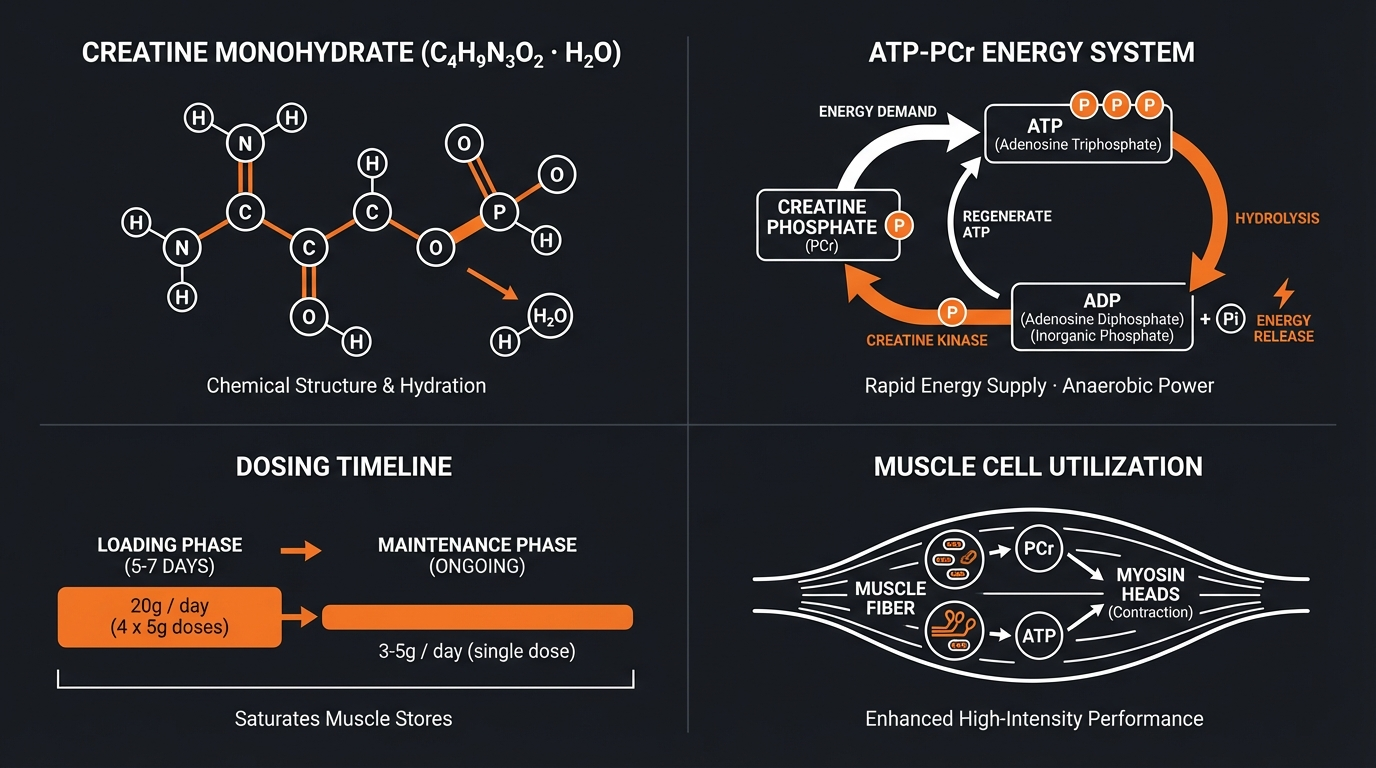
Creatine is a naturally occurring substance found in muscle cells, primarily responsible for producing energy during high-intensity exercises like weightlifting. A surge in creatine levels boosts ATP production, the energy currency of cells, thereby improving your ability to perform repetitive, rapid movements. This is why it is highly regarded among those seeking significant muscle gains.
Optimal Creatine Dosage for Muscle Building
Getting the correct dosage is key to maximizing the benefits of creatine supplementation. Most experts recommend:
- •Loading Phase: 20 grams per day, split into 4 servings of 5 grams each, for the first 5-7 days.
- •Maintenance Phase: 3-5 grams per day thereafter.
Skipping the loading phase is also an option. If so, take 3-5 grams daily initially, which will gradually increase muscle creatine levels over a few weeks. According to a study published in the *Journal of the International Society of Sports Nutrition*, this approach is equally effective but takes longer to achieve peak muscle creatine saturation.
Timing: When to Take Creatine for Maximum Results
One of the biggest debates surrounding creatine is the optimal timing for consumption. Should you take it before or after your workout? Research offers varied opinions, but a study by Schoenfeld et al. (2013) suggests that post-workout supplementation might slightly surpass pre-workout intake in efficacy. Hence, a practical approach might be:
- •On Workout Days: Take 3-5 grams of creatine immediately after your workout.
- •On Rest Days: Take 3-5 grams anytime during the day, ideally with a meal.
This timing helps replenish creatine stores and supports recovery, allowing for cumulative strength and muscle gains over time.
The Effects of Creatine on Muscle Building
The impact of creatine on muscle building is supported by numerous scientific studies. By increasing ATP availability, creatine allows for enhanced performance in high-intensity activities. This results in more effective workouts, and consequently, faster muscle gains. Some of the key benefits include:
Increased Strength and Power
Studies show that creatine improves strength gains by 5-10% more than exercise alone. This allows you to lift heavier weights and perform more reps, critical factors in muscle hypertrophy.
Improved Muscle Recovery
Creatine helps to minimize muscle damage and inflammation post-exercise, accelerating muscle repair processes. This means shorter recovery times and more frequent, effective workouts.
Enhanced Muscle Volumization
Creatine draws water into muscle cells, increasing cell volume and giving muscles a fuller, more volumized appearance. This not only enhances performance but also contributes to a more muscular physique.
Common Concerns and Myths About Creatine
Despite its popularity, creatine is often surrounded by myths and misconceptions. Here are a few addressed:
- •Myth: Creatine leads to kidney damage.Truth: Numerous studies, including a long-term review by Mayo Clinic, indicate that creatine is safe for healthy individuals when taken within recommended dosages.
- •Myth: Creatine causes dehydration.Truth: Maintaining proper hydration levels negates this concern. It's essential to drink adequate water especially when supplementing with creatine.
Summary and Call to Action
Understanding The Role of Creatine in Muscle Building: Dosage, Timing, and Effects is paramount for anyone looking to enhance their fitness regimen. The right dosage and timing can unlock significant performance and muscle growth benefits. If you're committed to optimizing your muscle-building efforts, consider incorporating creatine into your supplement regimen.
Ready to see the benefits for yourself? Start with a reputable, high-quality creatine supplement, follow the guidance provided here, and take your workouts to the next level!
Frequently Asked Questions
- How much creatine should I take per day?
- Take 5 grams of creatine monohydrate daily. That's it. You don't need loading phases, cycling, or fancy timing protocols. Just 5g every day, forever. It's the most researched and proven supplement in sports nutrition.
- Does creatine cause water retention and bloating?
- Creatine pulls water into your muscle cells, which can add 2-5 pounds of water weight in the first week or two. This is intracellular water though, so it makes your muscles look fuller, not bloated. It's a good thing.
- When should I take creatine for best results?
- Timing doesn't matter much. Just take it whenever you'll remember to be consistent. Some research shows a slight edge for post-workout, but the difference is so small it's not worth stressing about.
- Is creatine safe for long-term use?
- Yes. Creatine has been studied for over 30 years with no significant side effects in healthy adults. It's one of the safest and most effective supplements available. Claims about kidney damage have been debunked repeatedly in clinical research.