Pull-Up Assistance Bands: How to Use Them Effectively for Progression
Read our comprehensive guide on pull-up assistance bands: how to use them effectively for progression.
 Jeff·Aug 20, 2024·4 min read
Key Takeaways
- Assistance bands help you do pull-ups by supporting part of your body weight, making them easier until you build enough strength to go unassisted.
- Start with a thick band for more help and gradually work down to thinner bands as you get stronger.
- Loop the band around the pull-up bar and put your foot or knee in it, then do your pull-ups with proper form while the band gives you a boost.
- Track your reps and sets with each band so you know when it's time to move to less assistance.
- Hit pull-ups 2-3 times per week and throw in rows and lat pulldowns to build up all the muscles you need for unassisted pull-ups.
Get a Free AI Coach on WhatsApp
Ask questions, get workout plans, and track your progress — all from WhatsApp.
Message Your CoachPull-ups are a fantastic way to build upper body strength and muscle, but they can be intimidating for beginners. Thankfully, pull-up assistance bands offer a way to ease into this challenging exercise, making it more accessible for everyone. In this article, we'll explore how to use pull-up assistance bands effectively for progression, offering helpful tips and guidance to ensure you maximize your workout.
Understanding Pull-Up Assistance Bands
Pull-up assistance bands, also known as resistance bands, are elastic bands that provide varying levels of support to help you perform pull-ups. By supporting a portion of your body weight, these bands make it easier to complete the movement. They come in different resistance levels, usually color-coded, allowing you to choose the right amount of assistance based on your strength and fitness level.
How to Use Pull-Up Assistance Bands
Using pull-up assistance bands is straightforward, but correct application is crucial for safety and effectiveness. Here’s a step-by-step guide:
- •Select the Right Band: Choose a band that offers the right amount of resistance. Beginners may start with a thicker band, while advanced users might opt for a thinner band.
- •Anchor the Band: Loop the band around the pull-up bar securely. Ensure it is centered to provide even support.
- •Position Yourself: Place one foot or knee into the loop of the band. If you're using high resistance, drape the band under both knees for additional support.
- •Perform the Pull-Up: Grip the bar with your hands shoulder-width apart. Use the assistance from the band to pull yourself up, leading with your chest and pulling your chin over the bar. Lower yourself back down with control.
With practice, your strength will improve, allowing you to progress to bands with less resistance until you can perform unassisted pull-ups.
Benefits of Using Pull-Up Assistance Bands
Incorporating pull-up assistance bands into your routine offers numerous benefits:
- •Gradual Progression: Bands allow you to build strength over time, reducing the risk of injury.
- •Versatility: Assistance bands can be used for a myriad of exercises, not just pull-ups.
- •Improved Form: The right assistance helps maintain proper form, crucial for muscle activation and preventing strain.
A recent study published in the Journal of Strength and Conditioning Research highlights the effectiveness of resistance bands in improving muscle activity and performance, emphasizing their value in strength training programs.
Tips for Maximizing Your Progression with Pull-Up Assistance Bands
To make the most out of your pull-up training, consider the following tips:
Track Your Progress
Keep a workout log to monitor the number of reps and sets you complete with each band. Gradually decrease the band’s resistance as your strength increases.
Integrate Complementary Exercises
Combine pull-ups with other upper body exercises such as rows, lat pull-downs, and bicep curls. This comprehensive approach ensures balanced muscle development and enhances pull-up performance.
Consistency Is Key
Consistency is crucial for muscle growth and strength building. Aim to include pull-up exercises in your routine at least two to three times a week.
Common Concerns About Pull-Up Assistance Bands
Many beginners worry if they will ever be able to perform unassisted pull-ups. It’s important to remember that everyone progresses at their own pace. By integrating pull-up assistance bands, you're already on the right path. Patience and dedication are essential.
Additionally, some users wonder about the lifespan of resistance bands. Quality bands should be durable, but regular inspections for wear and tear are wise. Replacing damaged bands is crucial to maintain a safe workout environment.
Conclusion
Pull-up assistance bands are an invaluable tool for anyone looking to conquer pull-ups. By offering support and enabling gradual progression, they make this powerful exercise accessible to all fitness levels. Remember, consistency, proper form, and tracking your progress are key components to successfully using pull-up assistance bands.
If you're ready to start your pull-up journey, grab a set of pull-up assistance bands and witness your strength soar. Don't forget to share your progress and inspire others to achieve their fitness goals as well!
Further Learning
Frequently Asked Questions
- Do resistance bands actually help you learn pull-ups?
- Yes, but with a caveat. Bands help the most at the bottom of the movement where you're weakest, which is exactly where most people get stuck. The problem is they can become a crutch if you don't actively progress to lighter bands. Use them as a stepping stone, not a permanent solution.
- What size band should a beginner use for pull-up assistance?
- Start with a band that lets you do 5-8 reps with good form. For most beginners, that's a medium-heavy band (usually the green or blue one, about 40-80 pounds of assistance). If you can easily do 10+ reps with a band, move to a thinner one.
- How do you progress from bands to unassisted pull-ups?
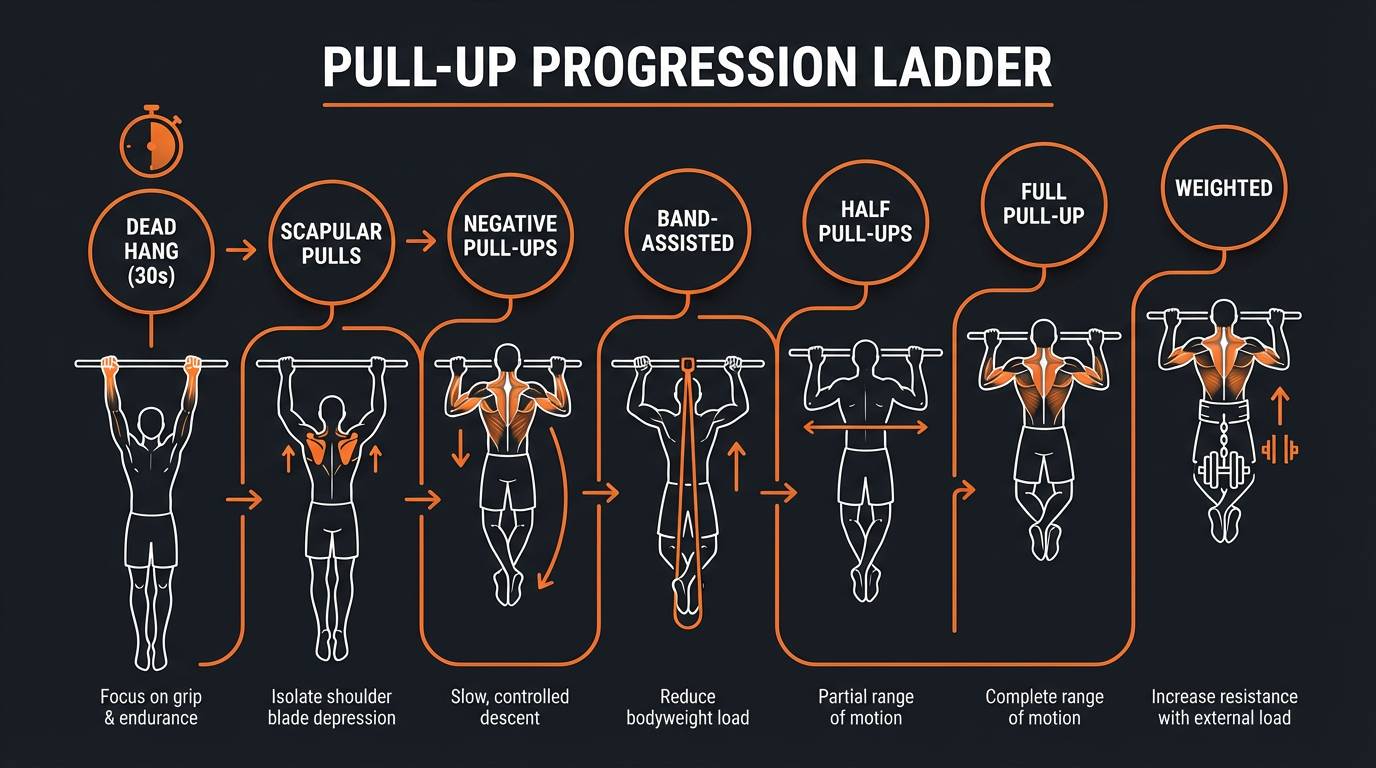
- Systematically reduce band thickness every 2-3 weeks as you get stronger. Once you're on the lightest band doing sets of 8-10, start mixing in negative pull-ups (jump up, lower slowly for 5 seconds). Most people can do their first unassisted pull-up within 6-8 weeks of consistent band work.
- Are bands better than the assisted pull-up machine?
- Bands are better because they let you practice the full movement pattern with natural body mechanics. The assisted pull-up machine locks you into a fixed path and provides constant assistance, while bands force you to stabilize yourself and give less help at the top where you need to build strength.