Diamond Push-Ups: Technique, Benefits, and Variations
Read our comprehensive guide on diamond push-ups: technique, benefits, and variations.

Are you looking to enhance your upper body strength and sculpt your triceps like never before? Diamond push-ups might be the perfect addition to your workout routine. This specialized form of push-ups can provide an array of benefits for fitness enthusiasts at all levels. In this article, we'll delve into the technique, benefits, and variations of diamond push-ups to help you harness their full potential.
What Are Diamond Push-Ups?
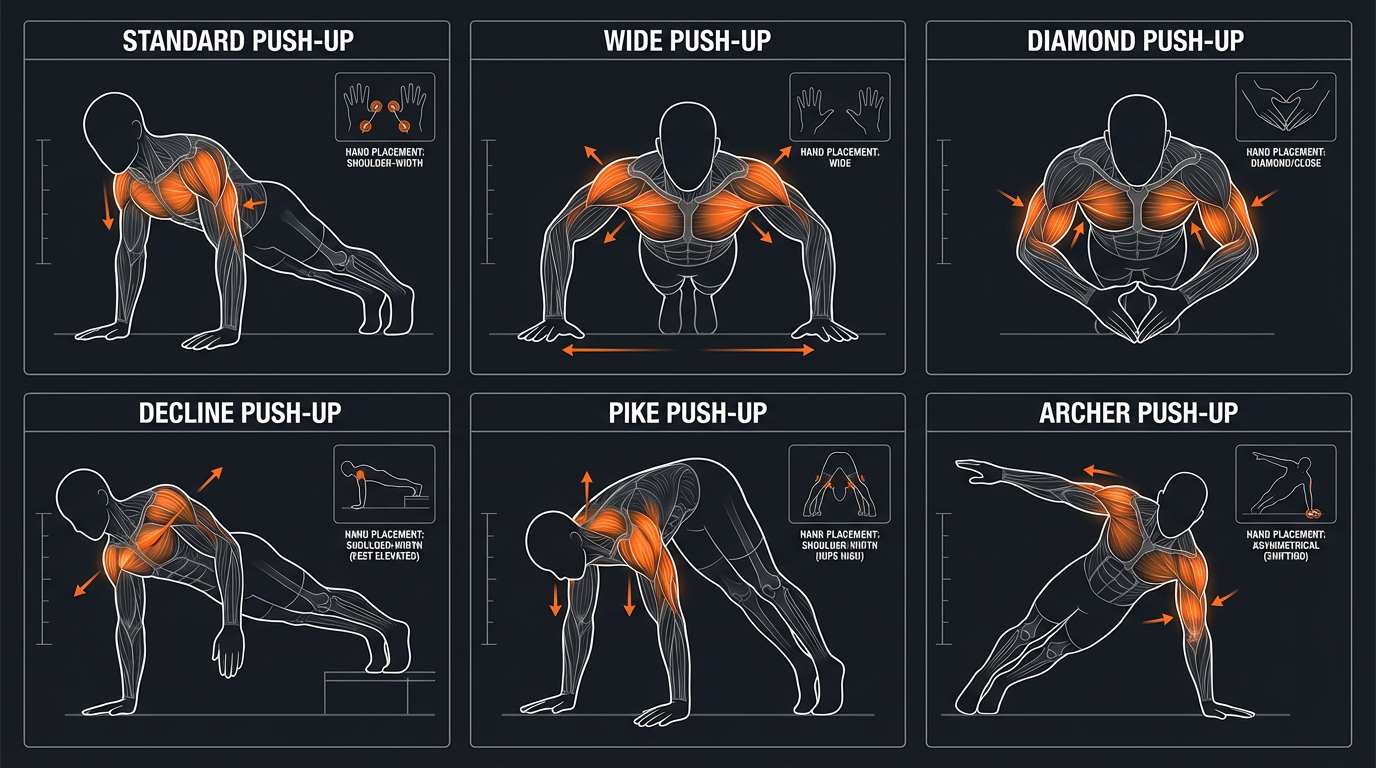
Diamond push-ups, also known as *triceps push-ups*, are a bodyweight exercise that targets the triceps, pectoral muscles, and core. The distinguishing feature of a diamond push-up is the hand placement. When performed correctly, this exercise can be more challenging than standard push-ups, emphasizing the triceps to a greater degree.
Technique: How to Perform Diamond Push-Ups Correctly
Proper technique is crucial for maximizing the benefits while reducing the risk of injury. Follow these steps to perform diamond push-ups effectively:
- •Start in a standard push-up position with your hands directly under your shoulders and your body forming a straight line from head to heels.
- •Bring your hands close together, forming a diamond shape by touching your thumbs and index fingers together.
- •Engage your core and keep your body straight as you lower yourself down, bending your elbows close to your body.
- •Lower your chest towards the diamond shape created by your hands until your chest almost touches your hands.
- •Push your body back up to the starting position, fully extending your elbows while maintaining control.
Repeat for the desired number of repetitions. Start with 3 sets of 10-12 reps and gradually increase as you build strength.
Benefits of Diamond Push-Ups
Diamond push-ups offer several benefits, making them a valuable addition to your fitness regimen:
- •Targeted Triceps Activation: Because of the unique hand placement, diamond push-ups focus intensively on the triceps muscles.
- •Increased Upper Body Strength: This exercise also engages the chest, shoulders, and core, promoting overall upper body strength.
- •Improved Muscle Definition: Regularly incorporating diamond push-ups can help enhance muscle definition in the arms and chest.
- •Bodyweight Convenience: No equipment needed makes diamond push-ups accessible and easy to incorporate into any workout plan.
According to a study published in the Journal of Strength and Conditioning Research, diamond push-ups are more effective at activating the chest and triceps than traditional push-ups, thus providing a more focused workout for those muscle groups.
Common Questions and Concerns
Many fitness enthusiasts have questions about diamond push-ups. Here are some common concerns:
Are diamond push-ups harder than regular push-ups?
Yes, diamond push-ups can be more challenging than regular push-ups due to the increased triceps engagement and the need for greater upper body strength.
How can beginners modify diamond push-ups?
Beginners can perform diamond push-ups on their knees to reduce the intensity. Focus on maintaining proper form and gradually progress to the standard version as strength improves.
Can diamond push-ups cause wrist pain?
Improper hand placement or excessive repetition can lead to wrist discomfort. Ensure your hands are positioned correctly and consider using push-up handles or performing the exercise on a soft surface to alleviate pressure on the wrists.
Variations of Diamond Push-Ups
To keep your workouts engaging and to target other muscles, consider incorporating these diamond push-up variations:
- •Elevated Diamond Push-Ups: Place your feet on an elevated surface to add intensity and further challenge your upper body.
- •Diamond Push-Up Hold: Pause at the bottom of the push-up position for a few seconds before pushing back up to increase time under tension.
- •Diamond to Regular Push-Up Superset: Alternate between diamond push-ups and regular push-ups to engage different muscle groups and add variety to your workout.
Conclusion
Diamond push-ups are a powerful exercise that can transform your upper body strength and muscle definition. Whether you're a beginner or an advanced athlete, incorporating diamond push-ups into your routine can bring significant benefits. Remember to focus on proper technique to maximize results and minimize the risk of injury. Start including diamond push-ups today and take your fitness journey to the next level!